Project Overview
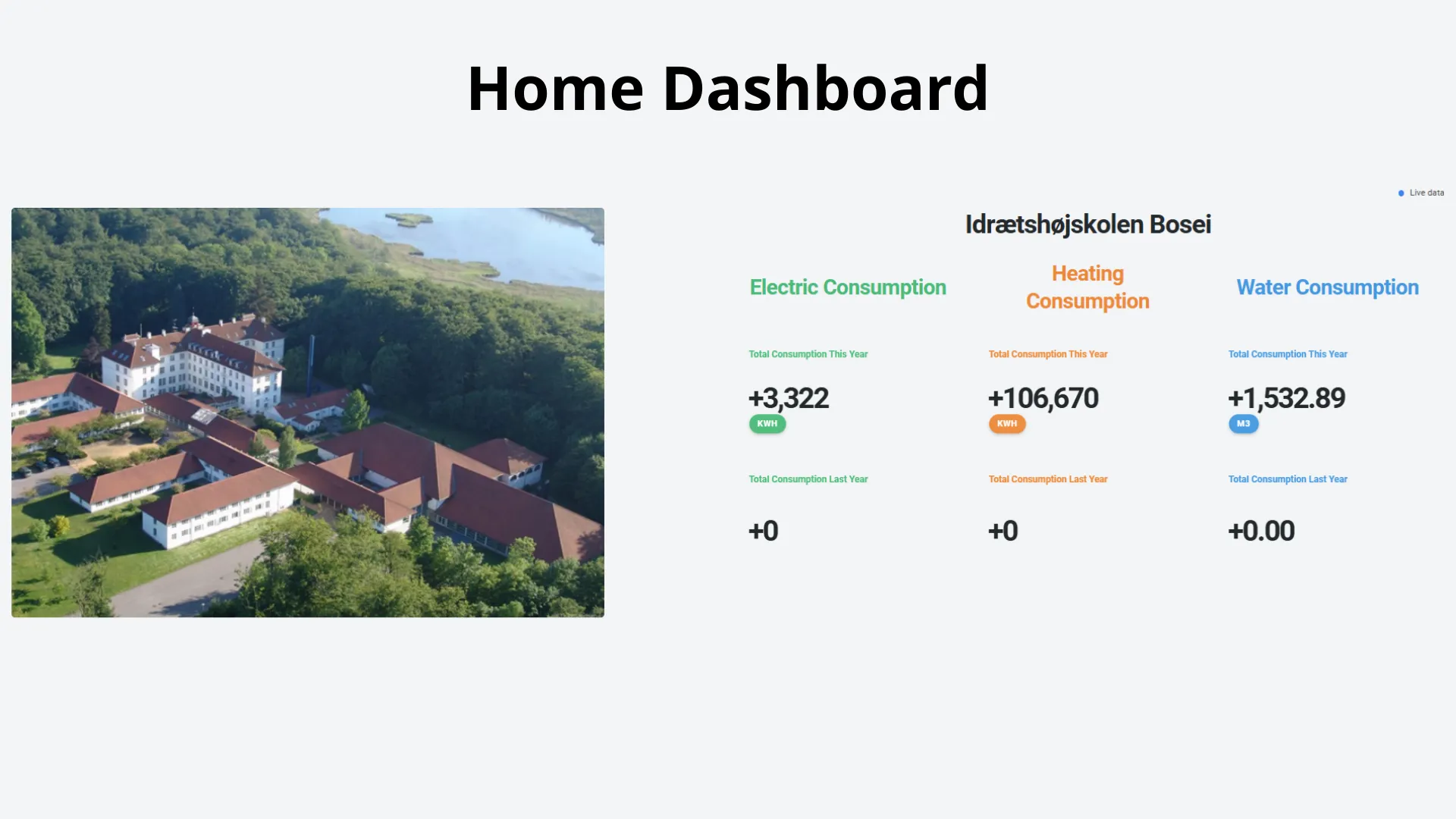
I implemented an IoT system to monitor electricity, heat, and water for Idrætshøjskolen Bosei in Denmark, bringing data from multiple systems into one unified platform. This helps the school track consumption more clearly, detect anomalies earlier, and support more efficient operations.
Operational Challenge
In educational and facility operations environments, data is often scattered across different device types and isolated systems. This makes continuous monitoring, data reconciliation, and reporting time-consuming and error-prone. To solve this, my goal was to centralize data into a single source while preserving enough detail for managers to analyze and make operational decisions based on real data.
Integration Architecture
Based on these requirements, I built a system architecture that connects multiple data sources into one monitoring platform. Shelly devices are used for electricity monitoring, while existing heat and water meters are read by a gateway via M-Bus. After normalization, data is sent to the monitoring platform for storage, dashboard visualization, and operational reporting.
- 01
Field Meters
Shelly devices for electricity; existing heat and water meters via M-Bus.
- 02
Mivo Gateway
Reads M-Bus meters and forwards normalized data over HTTP.
- 03
Monitoring Platform
Stores data, provides dashboards, and supports operational reporting.
Electricity Consumption Monitoring
For the electricity layer, I designed the dashboard to start with an overview and then drill down by area when needed. Key information includes electricity usage, consumption distribution, time-series trends, and time-based electricity pricing. This layout helps operators see both current values and trend behavior over time.
Electricity Monitoring by Area
After the overview layer, I configured detailed dashboards per meter so area-level consumption checks are faster and clearer. This approach is especially useful for isolating points with unusual consumption increases.
Electrical Device Management via Shelly Cloud
I integrate data from Shelly devices into the monitoring platform through the Shelly Cloud API to manage and monitor the electricity device layer.
Heat Consumption Monitoring
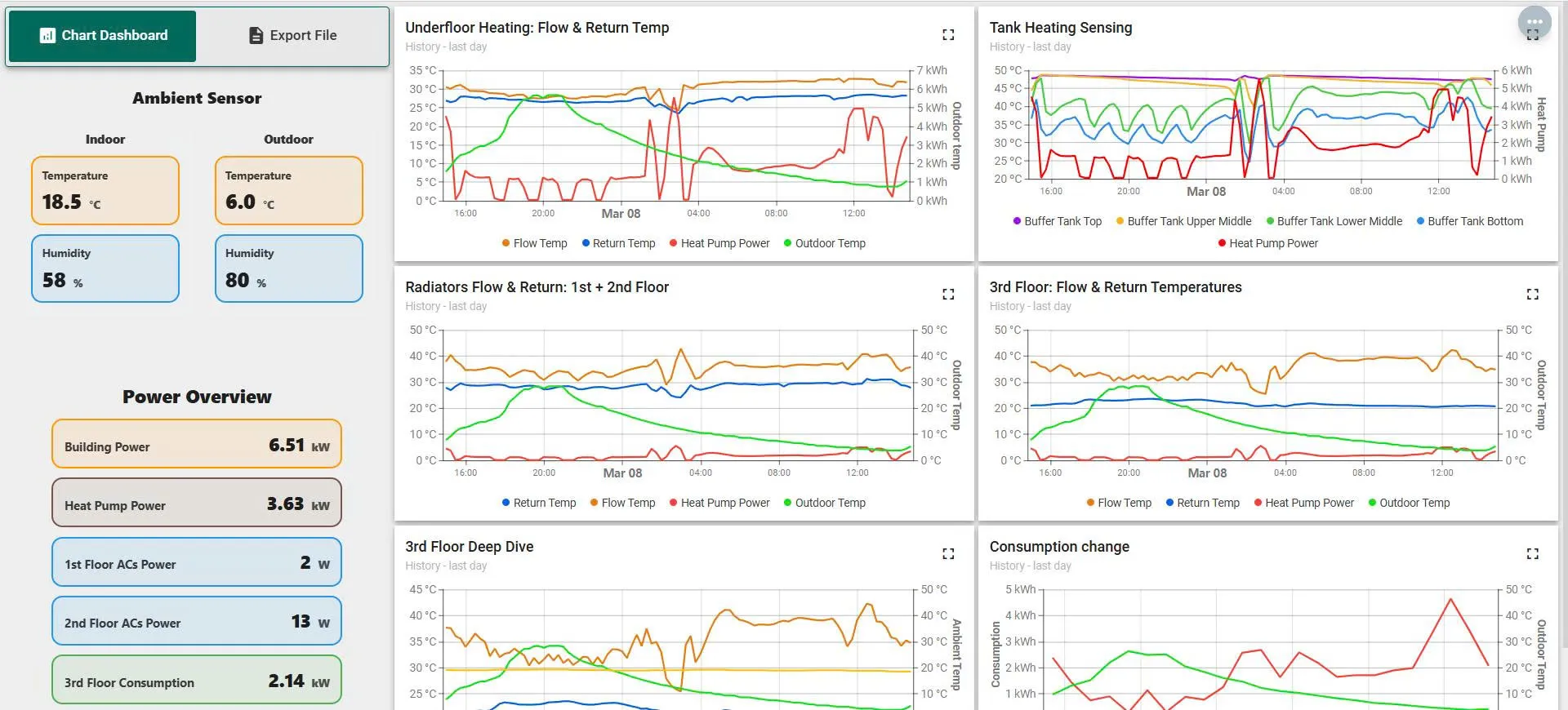
For the heating layer, I connect heat meters through a gateway via M-Bus and send data to the monitoring system over HTTP. The heating dashboard focuses on key metrics such as time-based consumption, supply and return temperatures, and flow rate. This gives the school a clearer basis to monitor and evaluate heating system performance.
Water Consumption Monitoring
I connect water meters through the same gateway architecture so water data is standardized and centrally visualized alongside electricity and heating data. The water dashboard allows monitoring by time and by month, making trend review more intuitive.
Tech Highlights
Multi-Protocol Integration
Technical Implementation: Shelly Cloud API for electricity; M-Bus via Mivo Gateway for heat and water
Benefit: One platform for data that previously lived in isolated systems
Layered Dashboards
Technical Implementation: Overview-first design with per-meter drill-down
Benefit: Faster checks and easy isolation of abnormal consumption
Reporting
Technical Implementation: Export-ready consumption data by system and by area
Benefit: Supports analysis, evaluation, and early anomaly detection
Maintenance Foundation
Technical Implementation: Centralized historical data per meter
Benefit: Enables proactive maintenance planning based on real data
Value Delivered to the Client
- Consolidated all fragmented electricity, heat, and water data into one management interface.
- Enabled fast tracking of consumption trends by system and by area.
- Supported report exports for analysis and early anomaly detection.
- Provided a data foundation for proactive maintenance planning.